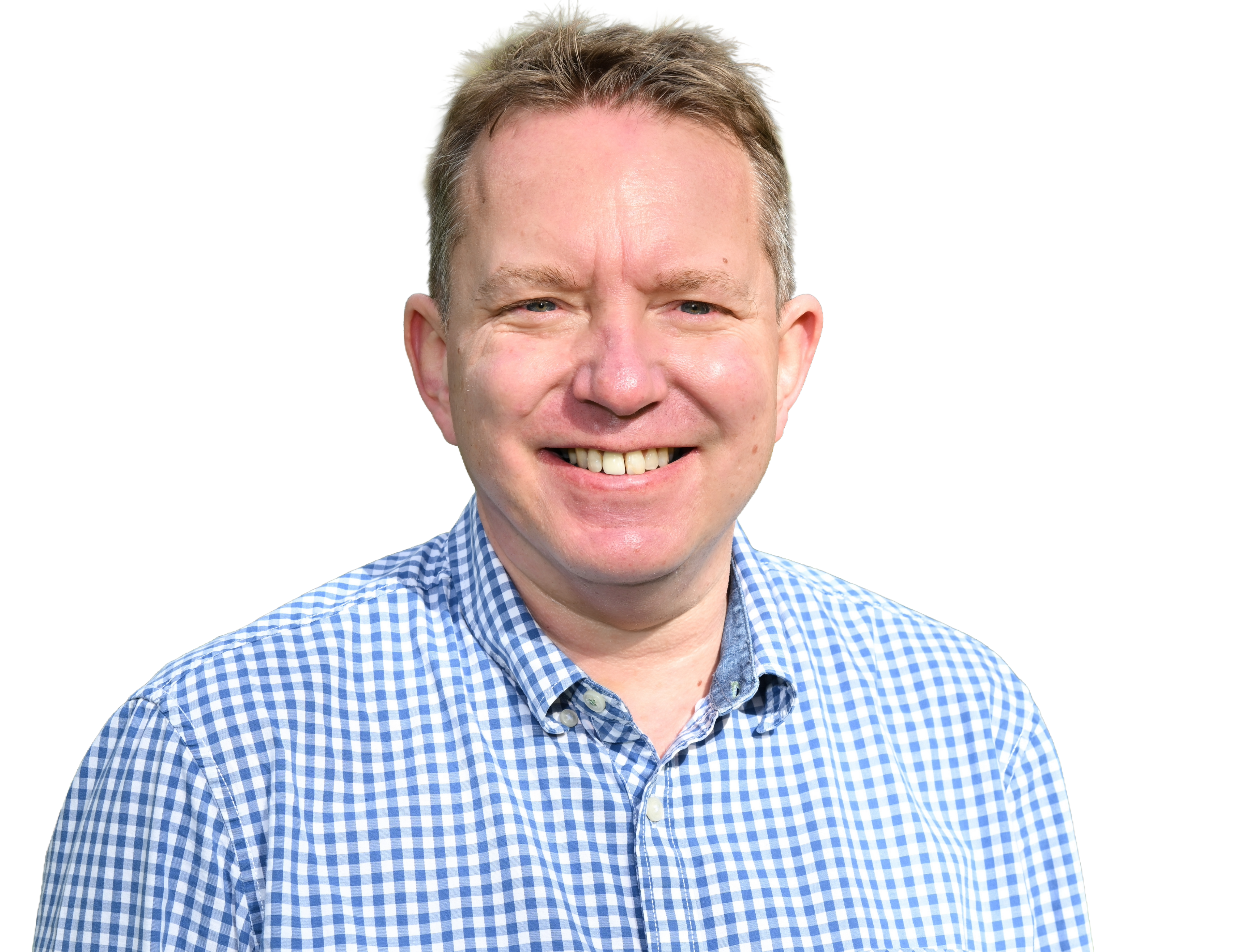


























Earlier this year, Dr Dan Furmedge was elected as RCP senior censor and vice president for education and training (VPET) and will formally take on the role later this year. As a consultant physician in geriatric and internal medicine at Guy’s and St Thomas’ NHS Foundation Trust, with experience as a college tutor, training programme director, PACES examiner and, most recently, RCP censor, he will bring a wealth of experience to the role.
Commentary clinical editor, Professor Ollie Minton, interviews Dan about why he ran for the position and what he is looking forward to when he takes on the role as VPET.
Ollie: You’re a geriatrician, but what college roles have led you to stand for election as VP for education and training?
Dan: I’d always wanted to work with undergraduates – once upon a time, I saw myself as dean at an undergraduate medical school. But that rapidly changed and I ended up working more in postgraduate medical education. This work opened up a gateway to becoming an internal medicine training (IMT) stage one regional training programme director (TPD).
I didn’t really get involved in any RCP work until I became a college tutor at St Thomas’ Hospital in London, when I first became a consultant. Before that, I’d been a resident doctor representative on an MRCP committee and had done the RCP MSc in medical education. I was responsible for the local delivery of internal medicine training with one of my colleagues, and doing that got me linked with the RCP – particularly with the associate college tutors and the then-Linacre fellow, Dr Jo Szram. That allowed me to develop local leadership skills and was a positive role for me in my local trust; it allowed me to build contacts and a network outside general and geriatric medicine.
At the same time, the censor role was advertised. That was probably the first time that I saw the wider workings of the RCP and realised the extent of the educational and CPD offering. I saw much more of the RCP’s national voice, the lobbying, and it opened my eyes to the work they do on public health and other issues.
The issues around the extraordinary general meeting and physician assistants turned the censor role into something quite different from previous years. It was interesting to observe the governance of such a big organisation, but also take on some leadership around what was going on.

That made me realise that the RCP was somewhere where you could make a difference. You can make a difference locally for a while, but the RCP has a voice nationally. So it seemed like a great place to be.
Dr Dan Furmedge
Senior censor and vice president for education and training
Ollie: Education seems to run through the various roles that you’ve had – so what is the challenge of this one?
Dan: It feels like an extension of what I’ve already done, but also much broader. My focus has mainly been on IMT stage one and general internal medicine training, alongside some geriatric medicine. This role is obviously much broader, covering all specialties within the RCP.
The NHS England medical training review is coming up; the RCP is going to have a huge voice within that process and it will be one of the key things to look at during my years in this role. It’s been really important for me to hear the voices of other specialty groups about what their challenges are, and I hope to be able to advocate for them all in any change.
People often conflate the RCP with setting exams and curricula – when actually that’s done by the Federation of the Royal Colleges of Physicians of the UK, in which we have a very significant voice and stakeholder role. But people write off the RCP because they think that is all that we’re about – we contribute significantly, but we don’t have direct responsibility for it.
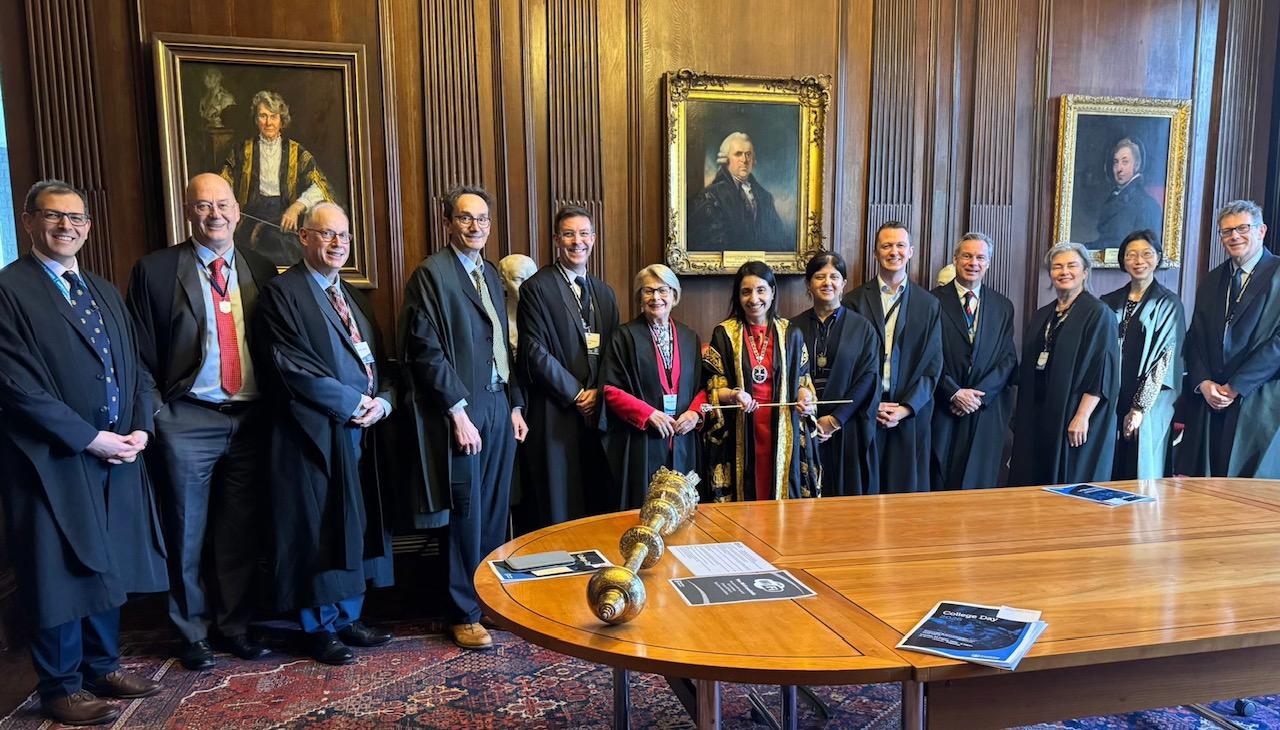
Image: Dan with the other censors and senior officers on College Day 2026.
Ollie: The RCP tries to represent everyone, from medical students to retired fellows – and it’s difficult. Where do you feel your role falls and what are the bits that you want to focus on, or think you can build on?
Dan: It’s important to aim to do something for everybody. When I stood for this position in the election, it became very apparent to me that many of my friends, colleagues and peers don’t necessarily see what the RCP does for them or why it is worth paying for membership or fellowship, and that is such as shame as I have quickly learnt that the RCP is doing a huge amount.
We have to start becoming involved with people’s training and being visible at undergraduate level, so that people who go on to be physicians feel like we are a part of their training. For example, every UK region is delivering training days and events for their doctors, and a large proportion is lecture-based training. I can’t see why we’re asking regions to deliver those individually. The RCP could have a big role in delivering some of that core, didactic education – leaving local areas to deliver more practical aspects, like peer-based facilitated discussions.
Then, if physicians have seen the RCP delivering and being part of their training, all the way through, they might feel more invested and see what we have to offer.
Responding to and working with the medical training review and the new RCP strategy, including the education strategy, is going to be really important.
Other smaller, specific things for me would be bringing back teach-ins if possible, which we used to run. I remember coming to those on Tuesday evenings at the RCP as a registrar and thinking they were brilliant.

Ollie: What do you see being the outcome of the RCP’s new strategy and the medical training review? Do you feel that there are going to be concrete differences for resident doctors?
Dan: Strategies can feel a bit like just words, but – based on what I’ve seen of the senior leadership team so far – there is a real desire to move things forward and change things for the better. Since I have been a censor, communication from the RCP to the censor group has been rapid, transparent and in search of improvement.
The RCP’s 2026–30 strategy is going to be the background structure of that, and I’m hoping that it will lead to some positive further changes. All the core work that the RCP has been doing in the background will continue, and that is often what is underrepresented to the RCP membership.
My peers, colleagues and resident doctors don’t see all the things that we are lobbying for; the direct one-to-one relationships and meetings that the RCP has with chief medical officers, NHS England, the health secretary and all the other groups. They don’t always see the quality, standards and clinical guidance that the RCP is creating or contributing to. They don’t realise that we are being asked to respond to national issues in real time; they don’t see us being vocal about the medical training review, assisted dying or corridor care. There’s a huge amount of work going on and we need to make it known and get people involved.
But, via word of mouth, I have been seeing a change. I encounter resident doctors and PACES examiners regularly and I’ve heard much more positive feedback about changes in the last year than previously. Three years ago, I would never have put myself forward, but seeing the ability to make these positive changes – and the ethos and vision of the team in the RCP now – has made a difference. We really do want to get things right and make sure that members and fellows feel that the RCP is doing something helpful for everybody. For me, that is underpinned by the strategy and the governance.

Ollie: That’s really nice and it’s great to see that work being done – but as you said, it can be hard to inform people. How could we inform people about RCP work – and how do you plan to update people about what you’re up to as you start the role?
Dan: It’s so hard, isn’t it? The communication team are already amazing and use every possible route, but we can keep engaging people through direct involvement in their training, being more visible in that. Why isn’t the RCP giving guest lectures at locally arranged training days? The trust visits that happen are great, but it is really hard to reach physicians who have busy lives.
Continued good work, word of mouth, encouraging people get involved, nurturing physicians and making people feel like we are a part of their training are all really important.
Ollie: What would success in the role look like in a few years’ time? What would you be happy doing?
Dan: Better engagement in some visible form – in the actual delivery of training. Trying to get people involved, spreading more opportunities about what they can get involved with and working out how that work can be rewarded. Productive work coming out of the medical training review that really has an effect. Increasing membership and fellowship subscriptions through positive engagement and increased relevance.
The huge networking and global work that’s happening with the RCP abroad and the international reputation that we have is something I want to work on. We’ve got PACES examination centres in 20 countries and a range of global workshops. There’s also the networking side – we’ve supported the development of the East, Central and Southern Africa College of Physicians (ECSACOP) – and we have a great working relationship. I’d underestimated the global impact of the RCP and the support that’s given to local networks, and helping medicine develop internationally – as well as benefiting from their expertise too. It’s been really interesting to see how that has developed and what the educational opportunities are, both ways.
Ollie: How are you going to balance it all, especially when you have to hold down a day job?
Dan: That is a problem! I do clinical work; acute take, inpatient geriatrics, inpatient general medicine, care home work, acute frailty and a few other areas – alongside a few other roles that are not reflected in my job plan. I’m trying to reduce clinical activity, although everyone will understand how difficult that is and I absolutely do not want to become someone who does no or very little clinical work, at any point in my career.
I’m quite an efficient person, and can move through things quickly, but – as many people do – I can end up taking on far too much. I’m going to have to evolve it over the next 3 months; it will be a mix of both roles, but I will have to be a bit more cut-throat about reducing things, because already my diary is full of meetings.
Ollie: I can only imagine there are going to be more unavoidable meetings to come, and lots of new people to meet!
Definitely. But it has been really great to meet people and amazing to network with influential people in very high positions, realising that I’m now coming to the table, where I can hopefully influence change.
Dr Dan Furmedge
Senior censor and vice president for education and training
Dr Dan Furmedge
RCP censor

Professor Ollie Minton
Clinical editor, Commentary