


























The Royal College of Physicians (RCP) has been collecting the treasures of medicine for over 500 years.
Founded by King Henry VIII in 1518, and with a museum established in the 17th century by William Harvey (1578–1657), our collections span artefacts from apothecary jars to bleeding bowls, Arabic manuscripts to rare early printed books, portraits, silver, medical instruments and diaries. Together, they tell the extraordinary story of medicine, physicians, and the lives they have touched across the centuries.
Now you can play a part in preserving this remarkable history by adopting a treasure from the RCP’s internationally significant collections.

How adoption works
- Choose your treasure: Select from a specially curated list of items in need of conservation, from rare books and manuscripts to artworks, instruments or portraits.
- Make your donation: Contribute the listed amount to support the full conservation and preservation of your chosen treasure.
- Receive confirmation: The Development Team will confirm your adoption and share details about the conservation work your gift will make possible.
- Be recognised: Your name (or that of a loved one) will appear on the website as the adopter (unless you prefer to remain anonymous). Where appropriate, adopters will also be acknowledged alongside the item when it is displayed.
- Follow the conservation work: You will receive updates on the progress of the conservation work and restoration of our adopted treasures, so that you can see the lasting impact of your generosity.
Why it matters
The history of medicine is the history of life and death.
From early anatomy texts and innovations in medical technology, to portraits of pioneering physicians and records of great epidemics, the RCP’s collections are central to understanding not only the story of medicine, but the story of humanity itself.
Get involved
Adoptions start from £250. Giving you the opportunity to support a particular treasure that speaks to you or adopt a treasure in memory of a loved one.
Whether you choose a 17th century anatomy text, a presidential portrait, or an early medical instrument, your gift will help protect the RCP’s remarkable heritage, preserving the stories of medicine’s past and inspiring its future.
If you are a UK taxpayer, your gift will be eligible for Gift Aid.
Adopt a treasureExplore the collection
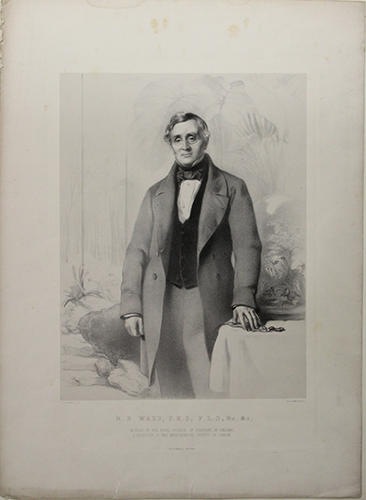
This chine-collé portrait depicts Nathaniel Bagshaw Ward (1791–1868), the English doctor and botanist best known for inventing the Wardian case – an innovation that revolutionised the global transport of plants and transformed botanical science, trade and horticulture. A fellow of the Royal Society and treasurer of the Microscopical Society of London, Ward bridged medicine, botany and early environmental science creativity.
The print shows signs of age, including surface dirt, tears and staining, and requires careful cleaning and repair. By adopting this treasure, you will help preserve a portrait of a pioneering physician–botanist whose work changed scientific history and enabled the spread of plant species across continents. Your support will ensure Ward’s legacy continues to inspire future generations.
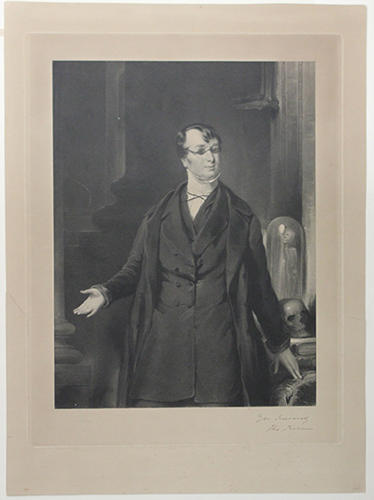
Thomas Turner was a pioneering English surgeon, educator and reformer who played a defining role in shaping medical training in the north of England. In 1824, he founded the Royal School of Medicine and Surgery in Manchester, the city’s first medical school and a precursor of today’s University of Manchester’s School of Medical School. His commitment to accessible, high-quality medical education helped transform professional standards and expand opportunities for generations of physicians.
This chine-collé print has suffered significant wear, including tears, losses and discolouration. Conservation will stabilise the fragile sheet, repair damage and ensure it can once again be safely displayed.
Adopting this portrait will help preserve the legacy of a major figure in the history of British medical education and the development of regional training for future doctors.
This is a hand-coloured lithograph of Charles White (1728–1813), an influential English physician and co-founder of the Manchester Royal Infirmary. White was a pioneering surgeon and obstetrician whose innovations helped advance maternal care in the 18th century. A complex figure, he is also remembered for the unusual case of Hannah Beswick; he mummified her remains at her request, due to her fear of premature burial – and later displayed her in his museum of anatomical specimens.
The portrait itself shows surface dirt, edge losses and light discolouration. Conservation will stabilise the paper, clean the image and restore its structure so it can be safely displayed as part of the RCP’s medical heritage collection.
Adopting this treasure will help preserve a rare likeness of a bold and influential – if at times controversial – early medical innovator, ensuring his story remains accessible to future generations.
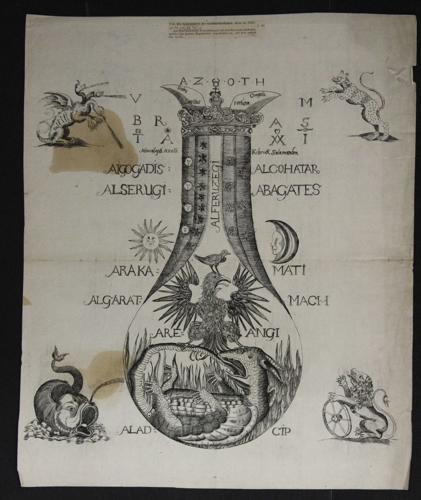
This detailed engraving, Die Geheimnisse der Goldmacherkunst [The secrets of the alchemist’s art], offers a fascinating glimpse into early modern alchemical practice. Likely produced in the 18th or early 19th century, the print reflects the mystery and the scientific curiosity surrounding the pursuit of transmutation – the transformation of base metals into gold. Rich in allegorical and technical imagery, it reveals how art and emerging science were related in the centuries before modern chemistry took shape.
By adopting this treasure, you will support the professional repair and conservation of the engraving; including surface cleaning, stain reduction and the careful mending of tears and folds. Contribute to help restore this rare visual record of alchemical history, ensuring that its intricate detail remains accessible to scholars, students and visitors.
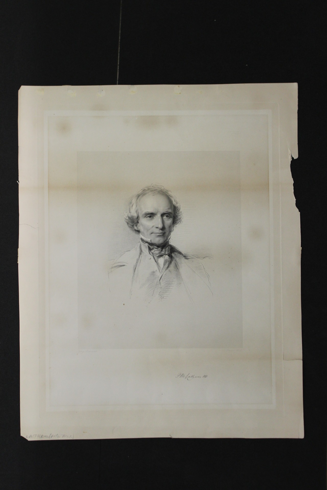
This historic portrait commemorates Peter Mere Latham, a distinguished physician, teacher and influential figure in the life of the Royal College of Physicians.
Throughout his career, Latham contributed to the College as Censor, Goulstonian Lecturer, Lumleian Lecturer, Harveian Orator and member of Council. His work in clinical medicine and medical education reflects the enduring importance of sharing knowledge and supporting future generations of physicians. He was also known for his work at St Bartholomew's Hospital and the Middlesex Hospital in London.
The print has suffered considerable damage, including discolouration caused by acidic backing materials, tears, missing sections and adhesive residue.
By adopting this treasure, you will support careful cleaning, repair and restoration of the fragile paper, helping preserve the likeness and legacy of a physician who dedicated much of his professional life to medical education and the College.
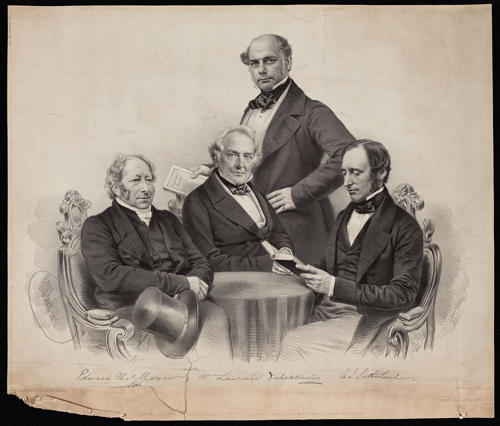
This rare mezzotint portrait from before 1851 brings together four influential 19th-century physicians. Produced from original daguerreotypes, it features Edward Thomas Monro (a leading authority on mental health), Sir William Lawrence (a distinguished surgeon and medical writer), Forbes B Winslow (a pioneering psychiatrist) and Alexander John Sutherland (an expert in psychological medicine). The print represents a moment when early photography and medical portraiture intersected to document physicians’ emerging professional identity.
The print survives on delicate chine-collé paper but is in fragile condition, with ingrained dirt and tears extending into the image. Earlier repairs using adhesive tape now threaten the surface – the print needs specialist cleaning, tape removal, and the repair and infilling of losses to preserve the artwork.
By adopting this portrait, you will help safeguard a unique visual record of early British medicine and ensure that it can continue to inspire historians, learners and clinicians for years to come.
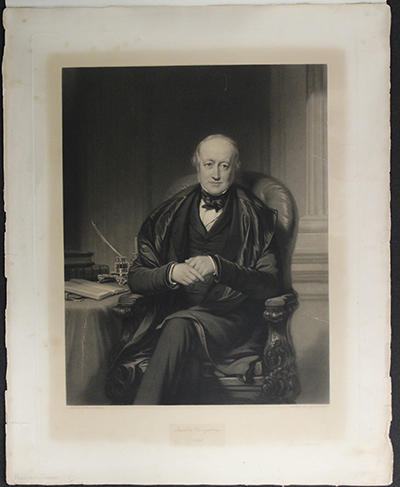
This engraved portrait depicts Joseph Hodgson, an influential Quaker surgeon. He was editor of the London Medical Review, surgeon to the Birmingham General Hospital and later president of the Medical and Chirurgical Society of London. He also identified Hodgson’s disease, an aneurysmal condition of the aorta.
Beyond his clinical achievements, Hodgson played a transformative role in expanding medical provision, successfully campaigning for the establishment of Birmingham’s Eye Infirmary to improve access to specialist care.
The print requires conservation to stabilise the fragile paper, reduce staining and repair long-standing damage so it can once again be safely displayed.
By adopting this portrait, you will help preserve the likeness of a pioneering surgeon whose commitment to service, scientific observation and public good continues to resonate across modern cardiovascular and surgical practice.
This striking 19th-century mezzotint depicts James Bentley (1785–1890), engraved by Thomas Lupton after the original painting by John Prescott Knight. Bentley, a prominent London civic figure, is shown in an elegant interior, surrounded by books and papers with St Paul’s Cathedral visible through the window – a testament to his standing in the city’s public life.
The print now shows heavy wear, including edge damage, dirt and tearing. It requires specialist conservation to stabilise the paper, repair losses and lift discolouration.
By adopting this treasure, you will help restore a visually rich portrait that captures Victorian civic identity and London’s cultural landscape, ensuring it can once again be displayed and appreciated.
This engraved portrait, was created by artist S Medley and engraved by N Branwhite in 1801. It depicts members of the Medical Society of London, one of the UK’s oldest surviving medical societies, founded in 1773. The Society united physicians, surgeons and apothecaries to share medical knowledge and consult on complex cases, a pioneering model of professional collaboration.
Published by R & H Causton, this copy carries a remarkable personal connection; an 1843 handwritten note by the obstetrician Dr Samuel Merriman. He records that he knew most of the figures and attests that ‘the likenesses are good’. His inscription in iron gall ink, adds authenticity and historical intimacy to this piece.
Today, the print shows surface dirt, foxing and numerous tears, including a large, repaired corner tear and discolouration from old glassine tape. Conservation treatment will include surface cleaning, stain reduction, tape removal, repair of tears and stabilisation of creases and folds.
By adopting this treasure, you will help fund the full repair of this engraving, ensuring it can once again be safely displayed and studied. Support this a record of one of Britain’s earliest medical societies, capturing the spirit of fellowship that continues to define the RCP.
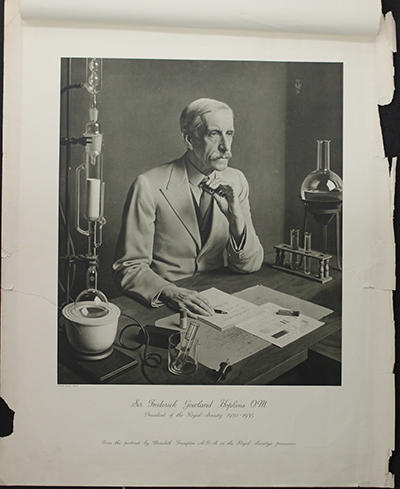
Sir Frederick Gowland Hopkins (1861–1947) was one of the most influential biochemists of the 20th century. Awarded the 1929 Nobel Prize in Physiology or Medicine for the discovery of vitamins, he also identified the amino acid tryptophan and later served as president of the Royal Society.
This historic photograph shows the pioneering scientist whose work transformed global understanding of nutrition and metabolism. The print now shows significant wear, with tears, creasing and discolouration preventing safe display.
By adopting this treasure, you will support essential conservation to stabilise and restore the portrait, ensuring that Hopkins’ extraordinary scientific legacy continues to inspire future generations.
This delicate pastel portrait depicts William Squire (1825–1899), a physician and epidemiologist associated with a remarkable milestone in the history of surgery.
Squire administered ether during Robert Liston's first major operation performed under general anaesthesia, an important moment in the development of surgical care. The introduction of anaesthesia transformed medicine, making operations possible that would previously have caused unimaginable pain and suffering.
The portrait has suffered significant damage over time. Its paper is discoloured, crumpled and distorted, with deep folds causing cracks across the surface.
By adopting this treasure, you will help fund specialist cleaning, careful flattening and repairs to its fragile surface, preserving the likeness of a physician connected to one of the most transformative advances in medical history.
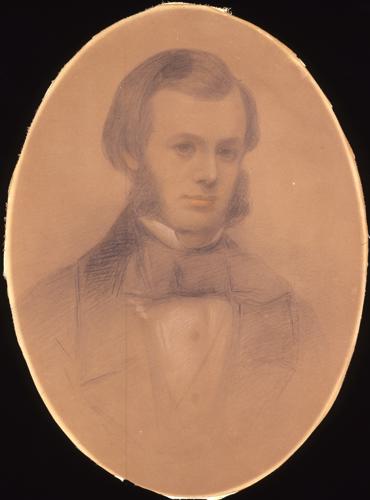
This finely engraved portrait of Robert Smirke (1752–1845) – celebrated painter and Royal Academician – was created by C Picart, after an original by Mary Smirke.
Time has taken a toll; the historic mount has become severely degraded, causing foxing, staining and structural weakness to the print beneath. Conservation will include removing the brittle mount, separating the print from its backing, careful cleaning and stabilisation.
By adopting this portrait, you will help restore an important record of one of Britain’s notable artistic families and preserve a work that reflects the deep historical connections between art, culture and medicine within the RCP collections.
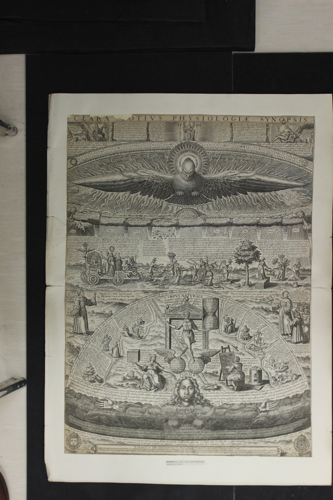
Clara totius physiologiae synopsis (translated as Clear Synopsis of Physics in Its Entirety) is a 1615 philosophical engraving designed by the French Franciscan friar and professor or philosophy, Martin Meurisse, and engraved by Léonard Gaultier in Paris.
The intricate engraving offers a fascinating glimpse into the world of historical scholarship, where art and learning came together in extraordinary detail. The work was designed for use by students during oral examinations. Its elaborate imagery reflects the importance of visual learning and the exchange of knowledge in earlier centuries.
The print has suffered damage from folding and previous mounting. Tears, losses and an old lining have weakened the paper, while a separate printed text sheet remains attached beneath the engraving.
By adopting this treasure, you will help fund specialist cleaning, the removal of damaging earlier repairs and careful restoration of the delicate paper, preserving a beautiful example of the relationship between art, education and scientific enquiry.
For more than 370 years, the sound of this remarkable silver bell has connected generations of physicians at the Royal College of Physicians.
Baldwin Hamey (1600–1676), an eminent 17th-century RCP fellow, used the bell to call College meetings to order during his time as registrar. When he retired in 1655, he presented it to the College, leaving behind a deeply personal symbol of his service.
Its Latin inscription expresses his wish that the bell's sound would always recall his voice within the College. Remarkably, the bell is still used by the RCP registrar today, making it a living link between the College's past and present.
Over the centuries, grease and tarnish have accumulated on the bell's silver surface. Specialist conservation is needed to carefully clean the bell and document its condition. The work will also include the installation of pollutant-absorbing materials to help protect it from further tarnishing while on display.
By adopting this treasure, you will help preserve an irreplaceable part of the RCP's ceremonial heritage, ensuring that Hamey's bell continues to connect physicians across the centuries.
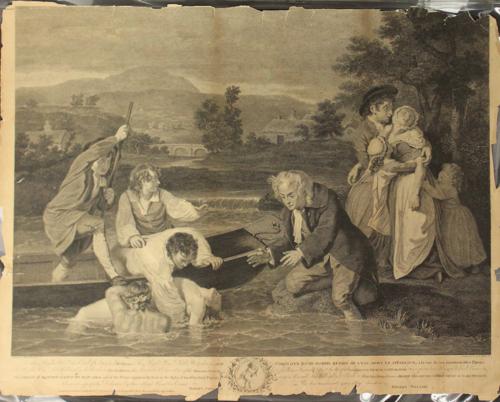
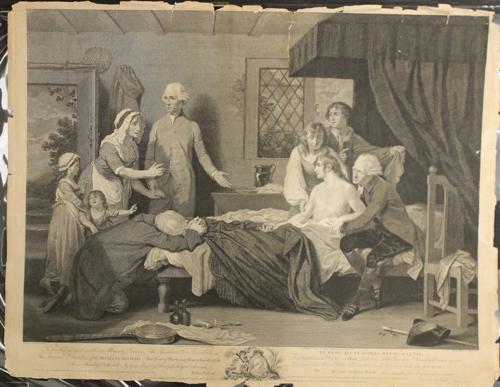
This poignant 1787 engraving was engraved and published by Robert Pollard, after a painting by Robert Smirke. Dedicated to the stewards and directors of the Humane Society, it captures a moment of tragedy and compassion on the River Thames. The scene shows a group of rescuers recovering the body of a young man from the water. Nearby, the boy’s distraught mother faints into her husband’s arms as two small children cling to her skirts. The text in English and French, celebrates the Humane Society, which was founded in 1774 to promote resuscitation when the concept was still novel.
Printed on soft wove paper, the engraving is severely damaged, with large tears, staining, foxing, and the complete loss of its upper border. Conservation treatment will include surface cleaning, aqueous washing to reduce discolouration, repair of tears, infilling of losses and sensitive inpainting to restore the composition.
By adopting this treasure, you will help fund the restoration of this deeply human work, an image capturing the peril and compassion at the heart of 18th-century medical progress. Support this rare engraving so that it can once again be safely appreciated as part of the RCP’s rich history of medicine and humanity.
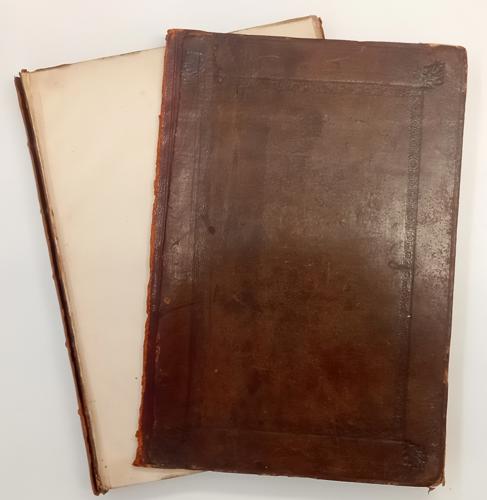
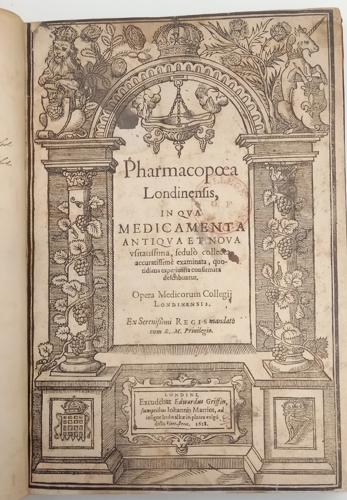
Published on 7 May 1618, this extraordinary volume is the first edition of one of the most important publications in the RCP's history. The London Pharmacopoeia established an official list of medicines that apothecaries could dispense, reflecting the College's early responsibility for regulating medicines and medical practice.
Published under the authority granted by King James I, the book offers a fascinating insight into the medicines, professional debates and standards of healthcare more than 400 years ago. This first edition was quickly followed by a revised version later that year, making it a particularly significant record of the College's history.
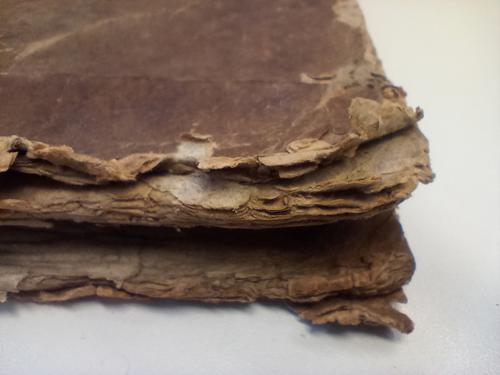
The book was last repaired in 1968, but its binding has since deteriorated and both covers have become detached. By adopting this treasure, you will support careful restoration of its historic leather binding, helping preserve a remarkable chapter in the development of medicines regulation for future generations.
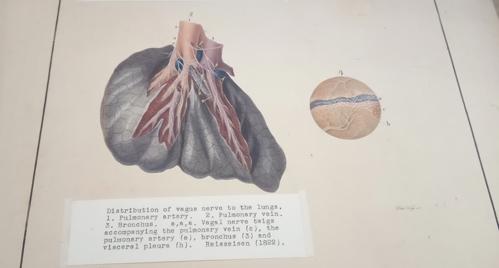
This beautifully illustrated anatomical work offers a remarkable glimpse into the scientific exploration of the human body in the early 19th century. Reprinting a prize-winning essay from 1808, it contains spectacular, detailed colour illustrations of the lungs, revealing the extraordinary care and precision involved in documenting human anatomy.
Its large-format plates, all measuring approximately 37 by 55 centimetres, demonstrate how medical knowledge was recorded and shared long before modern imaging technology.
Today, the original covers are deteriorating, leaving the loose pages and delicate illustrations vulnerable to damage. Adopting this treasure will help fund specialist cleaning, paper repairs, a secure binding structure and a bespoke protective box, preserving these beautiful anatomical illustrations for future study, research and display.
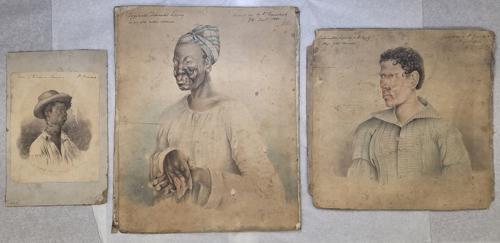
These rare watercolour drawings, created in Jamaica between the 1850s and 1880s, offer an important and complex record of medicine during this time.
The drawings were passed from Louis Quier Bowerbank to Gavin Milroy, who was appointed to investigate the spread of leprosy. Among the relatively few representations of people of colour in the RCP's collections from this period, they provide an opportunity to examine how patients were observed, represented and understood within colonial medical practice.
The collection also raises important questions about historical medical assumptions, including the possibility that benign keloid scarring was interpreted through a racialised medical lens.
Due to poor storage conditions over the years, these drawings have become extremely dirty and the card they are mounting is beginning to crumble. They need thoroughly cleaning and stabilising.
By adopting these drawings, you could help safeguard a rare visual record of patients whose experiences might otherwise be overlooked, enabling future generations to study the history of medicine with greater understanding of its human and colonial contexts.
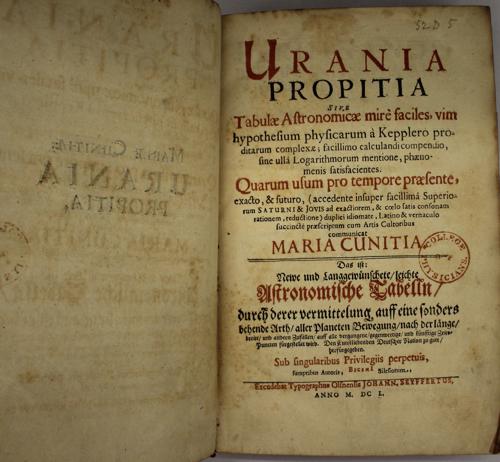
Published in 1650, Urania Propitia is the work of Maria Cunitz (1607–1664), a remarkable 17th-century astronomer whose mathematical and astronomical tables contributed to the scientific understanding of her time.
Created during an era when women's contributions to scientific scholarship were often overlooked, this important volume reflects the intellectual curiosity and achievements of a pioneering woman in science. It also demonstrates the breadth of the RCP's historic collections, where medicine, mathematics and the natural sciences have long intersected.
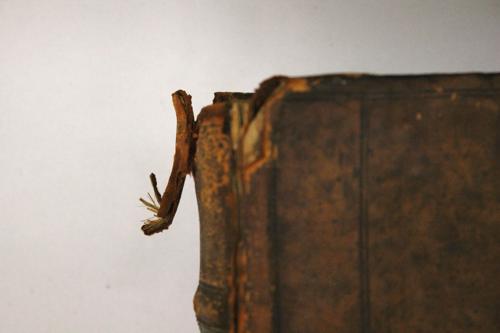
The book's leather binding has deteriorated considerably. Its covers are pulling away, the pages are difficult to open safely, and the book's structure is beginning to separate.
By adopting this treasure, you will help fund essential repairs to its binding and pages, safeguarding the work of an extraordinary female scholar and preserving an important piece of scientific history for generations to come.
This remarkable 16th-century book offers a rare and personal connection to William Harvey (1578–1657), the pioneering physician whose discoveries transformed our understanding of the circulation of blood.
Harvey's own handwritten notes appear throughout his copy of the works of Italian anatomist Gabriele Falloppio, providing an extraordinary glimpse into the thoughts and observations of one of medicine's most influential figures.
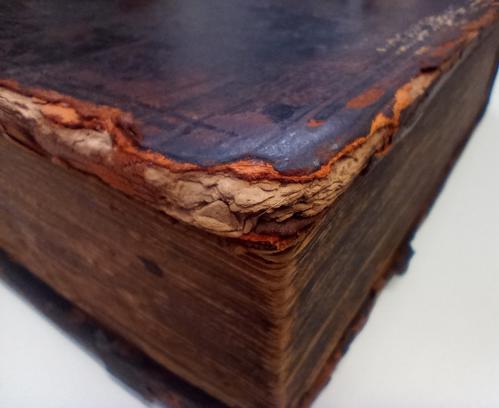
Almost all Harvey's books were destroyed in the Great Fire of London, making this the only confirmed annotated copy held in the RCP's library. Bound in 17th-century calf leather, the volume now has splitting cover edges, weakened hinges and loose pages.
By adopting this treasure, you will help fund specialist conservation to strengthen its binding, repair fragile pages and protect a precious surviving record of Harvey's intellectual life, ensuring future generations can continue to study and appreciate this remarkable piece of medical history.
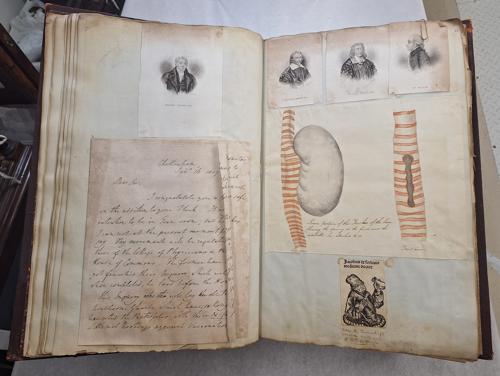
This fascinating scrapbook opens a window onto the medical profession and society in Victorian Britain. Compiled by physician Philip Henry Pye-Smith, who delivered the RCP's Lumleian Lectures in 1892 and Harveian Oration in 1893, it brings together correspondence, cartoons, newspaper cuttings and illustrations exploring anatomy, disease and medical treatments.
Particularly significant are its insights into historical attitudes towards disability, mental health, gender and sexual identity. These records help us understand not only how medicine has developed, but also how society's perceptions of health, illness and difference have changed over time.
Over time the scrapbook’s pages have become dirty, and some are water-damaged. Many of the inserts have become detached as the adhesive has broken down. The volume is in need of stabilising and repair.
By adopting this treasure, you could help preserve a valuable and thought-provoking record of Victorian medicine, ensuring that future generations can explore, question and learn from the medical and social attitudes of the past.
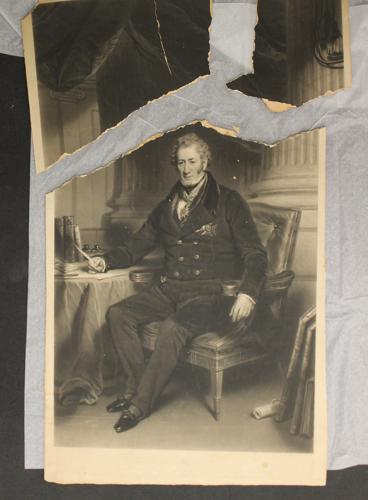
This large-format mezzotint engraving of Sir William Burnett (1779–1861) was engraved by Henry Cousins. It depicts a portrait, by Martin Archer Shee, of one of the most distinguished 19th century naval physicians . Burnett served as Physician General of the Navy from 1832 to 1855 and was physician to King William IV. His career combined medical innovation with exemplary service, overseeing naval personnel’s health across the British Empire, and contributing to naval hygiene and sanitation improvements.
This striking mezzotint has suffered severe physical damage. The print has split into four large pieces, with an additional tear across the figure’s hand and foot. It also shows discolouration, staining and damage from aged backing materials and adhesive tapes.
Conservation treatment will include careful surface cleaning, removal of the backing board, repair of tears and losses, and sensitive inpainting where necessary. By adopting this treasure, you will help fund the professional repair and conservation of this important portrait, rescuing a fragile example of early 19th-century printmaking. Adopt this print to ensure that Sir William Burnett’s image and pioneering legacy can once again be safely displayed within the RCP’s collection.
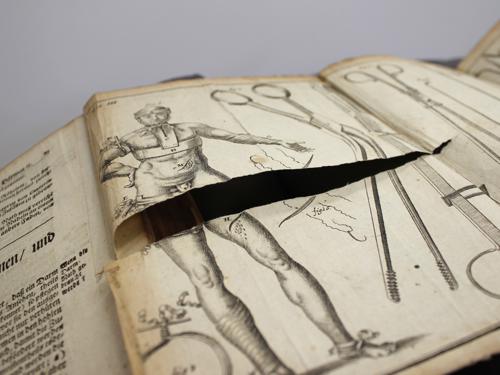
This richly illustrated surgical manual by Lorenz Heister (1683–1758) was one of the most important medical texts of the 18th century. Published in Nuremberg in 1724, this second edition of Chirurgie [Surgery] provides an overview of contemporary surgical practice; from wound care and amputation to the use of innovative instruments. Its nineteen folded copperplate engravings depict surgical tools and procedures, capturing a period of profound medical science transformation. This volume was owned by Harvey Cushing, pioneering neurosurgeon and bibliophile, whose collection became the foundation of Yale’s Medical Historical Library.
Heister’s manual needs some damaged paper and misfolded plates repaired and the whole manual needs cleaning. By adopting this treasure, you will support vital conservation work to repair damaged paper, correct misfolded plates and carefully clean this rare volume.
Contribute to help preserve a milestone in surgical history and a tangible link between two great medical institutions, ensuring that future generations can appreciate this extraordinary artefact.
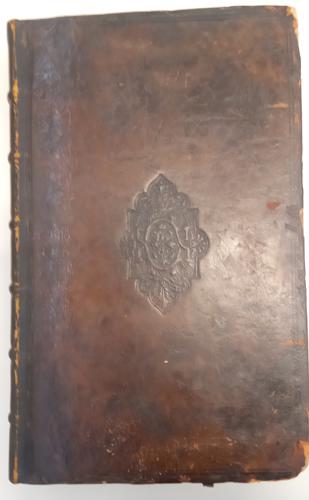
This extraordinary scrapbook contains spectacular anatomical drawings created by Edward Tyson, William Cowper and Henry Hunt during the late 17th century. The illustrations formed part of Tyson's work exploring the similarities and differences between living creatures, including humans and other primates.
Tyson was among the earliest scientists to propose a continuity of characteristics between humans and other primates. His observations contributed to ideas that would later influence research into evolution and comparative anatomy, subjects that remain central to scientific discovery today.
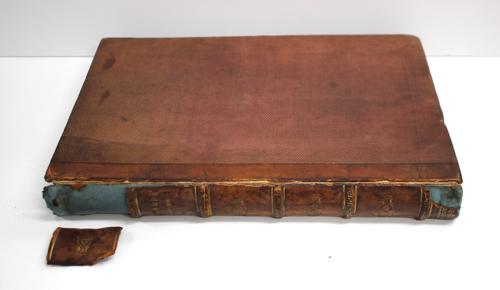
The volume’s front cover has become completely detached, and its whole binding needs assessing and potentially replacing. The pages need cleaning, and the inserts need to be assessed to ensure they are secured in such a way as to ensure long term survival.
By adopting this treasure, you could help safeguard a remarkable collection of early anatomical illustrations, preserving a fascinating record of the curiosity, observation and enquiry that helped shape our understanding of life.
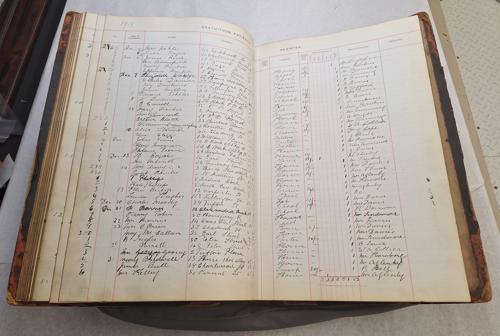
Behind every medical record is a human story. These remarkable registers document the people who received care at London's Western Dispensary, established in 1789 to provide healthcare to poorer residents of Westminster and surrounding areas.
Dating from the early 20th century to the founding of the NHS, the registers record patients' names, ages and occupations, alongside details of those who supported their treatment. They offer a rare and deeply personal insight into the lives of people seeking healthcare before the establishment of a national health service.
Connected to the RCP's 2026–27 exhibition, Patient Voices, these records remind us that the history of medicine is not only the history of physicians and discoveries, but also of the patients whose lives were touched by care.
The binding, and particularly the spines, of these volumes are in very bad condition, rendering them unusable for most purposes. They need largescale repairs, including recovering of corners and board edges, and potential re-sizing of the textblocks.
By adopting these registers, you could help preserve the voices and experiences of patients from the past, ensuring their stories remain part of our shared medical history.
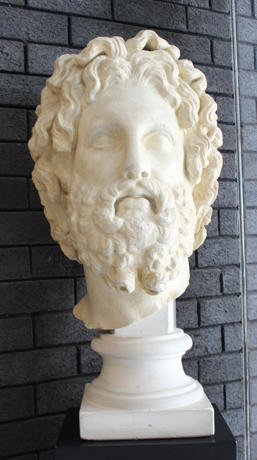
In Greek mythology, Asclepius son of Apollo and Coronis, was revered as the god of medicine and healing. His emblem – the snake-entwined staff known as the rod of Asclepius – remains one of the most enduring worldwide symbols of medicine. The RCP holds a plaster copy of the colossal marble head of Asclepius (5th century BC), the original of which is in the British Museum.
The RCP’s copy suffers from flaking plaster and requires careful conservation to be displayed. Supporting its repair will preserve an iconic symbol of medicine, prevent further degradation and improve its visual appearance.
Support this fragile piece of heritage to protect it while reaffirming the enduring values of care, knowledge and healing that Asclepius represents.
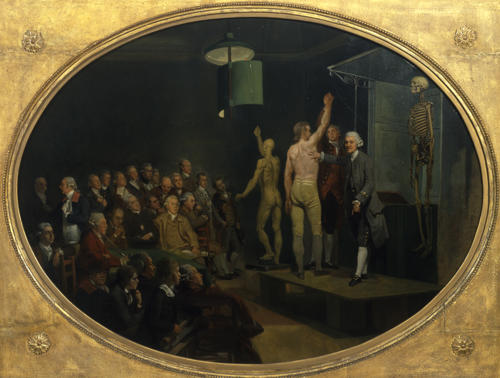
This remarkable painting by celebrated 18th-century artist Johann Zoffany captures William Hunter, the distinguished physician, anatomist and teacher, delivering a lecture. It offers a fascinating glimpse into the history of medical education and the sharing of anatomical knowledge during a period of significant scientific discovery.
One of the most frequently reproduced images in the Royal College of Physicians' collections, the painting holds considerable cultural and historical importance, bringing to life a defining period in the development of medical teaching.
To ensure this important artwork can be appreciated and studied in the greatest possible detail, the RCP hopes to commission professional, high-resolution, colour-matched photography. This will create an accurate digital record of the painting, capturing its colours and intricate details and enabling high-quality reproductions for research, education and wider public engagement.
By adopting this treasure, you will help bring an important moment in medical history to a wider audience, ensuring that this remarkable painting can continue to inform, inspire and be enjoyed by future generations.
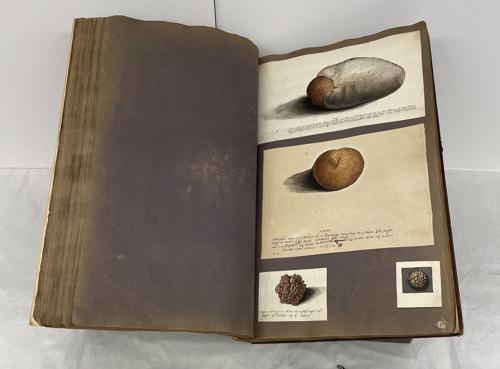
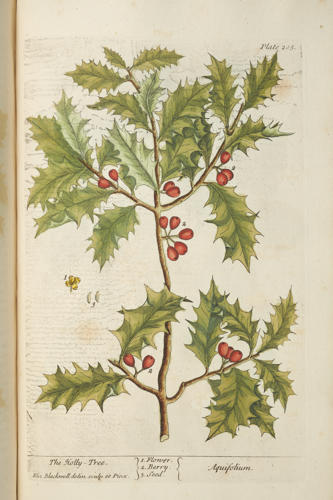
This extraordinary two-volume work celebrates the remarkable achievements of Elizabeth Blackwell (c.1700–1758), a pioneering botanist, illustrator and entrepreneur who made an important contribution to the understanding of medicinal plants.
Published between 1737 and 1739, A Curious Herbal contains 500 beautifully detailed illustrations of medicinal plants, each personally drawn, engraved and hand-coloured by Blackwell. At a time when women were largely excluded from formal medical and botanical education, her skill, determination and scientific knowledge enabled her to produce a work of exceptional quality and significance.
The herbal has a particularly special connection to the Royal College of Physicians, which endorsed it as a reliable source of accepted medical knowledge. Widely used as an authoritative reference for medicinal plants and their domestic uses, it reflects the important contribution women made to advancing medical knowledge, even when they were excluded from the institutions and professions that formally recognised it. Its title reflects the original meaning of ‘curious’ as careful, accurate and precise.
Although these beautiful volumes remain in good physical condition, access to their remarkable contents is currently limited. Digitising both volumes would allow all 500 botanical illustrations to be shared with audiences around the world, opening up this important work to researchers, students and anyone interested in the history of medicine, pharmacology and botany.
By adopting this treasure, you will help bring Elizabeth Blackwell's extraordinary work to a global audience, making centuries-old botanical knowledge accessible to new generations. Your support will help celebrate the often-overlooked contributions of women to medicine and science, ensuring that Blackwell's remarkable achievements can be discovered, explored and appreciated far beyond the walls of the RCP.
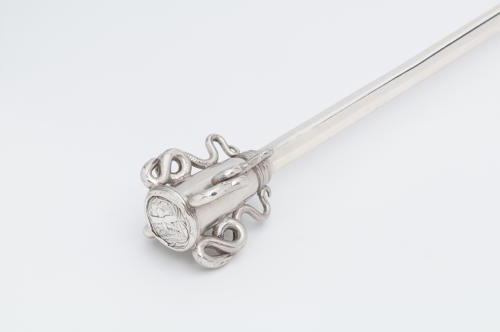
The college caduceus is one of the most important treasures of the RCP; a silver rod capped with four intertwined snakes and inset with the college arms. It has served as the president’s symbol of office since 1556 when it was presented by Dr John Caius, one of the RCP’s early presidents. The caduceus is carried on formal occasions and embodies the enduring authority, continuity and identity of the RCP.
The current display case, funded by fellows in the 1970s, now requires replacement. A new museum-grade case will ensure the caduceus is displayed to modern conservation standards.
Adopt the caduceus to ensure that this rare and highly symbolic treasure can continue to be used and displayed safely, preserving an irreplaceable link to the RCP’s origins and traditions.
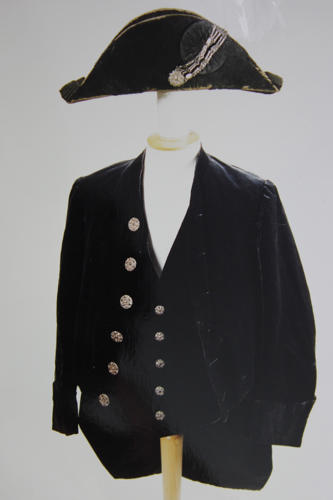
Sir William Withey Gull (1816–1890) was a prominent Victorian physician, RCP fellow and censor (examiner). He was the protégé of Sir William Jenner and built a distinguished career at Guy’s Hospital, London – including assisting in treating the Prince of Wales for typhoid in 1871. As a result, he was made a baronet by Queen Victoria and appointed as a Royal Physician. He named the eponymous Gull’s disease in 1873 and was the first to describe anorexia nervosa in 1874. Based on circumstantial evidence, Gull has been accused of being Jack the Ripper by some 20th-century writers.
The 1872 baronetcy presentation was made by Henry Poole & Co; Saville Row tailors still operating today. Henry Poole & Co have offered to loan a sword and shoes to complete the ensemble, if the costume can be conserved and displayed at the RCP dress.
Support the conservation of this stunning example of court dress to help preserve the legacy of a leading Victorian physician and create a vivid connection to the history of medicine.
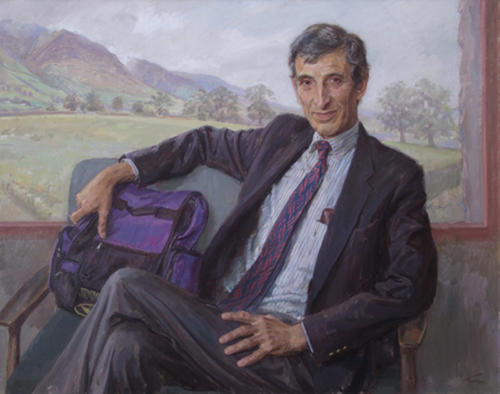
Professor Sir George Alberti, President of the RCP from 1997 to 2002, made an important contribution to the treatment of diabetes, helping improve the care of patients experiencing diabetic ketoacidosis, a potentially life-threatening medical emergency.
His recommendations, known as the Alberti regime, helped establish a more consistent approach to insulin and fluid therapy, making a lasting contribution to clinical practice and patient care.
The RCP's portrait of Professor Alberti celebrates both his medical achievements and his leadership of the College. Specialist conservation is now required, including structural repairs to the frame, restoration of its decorative surface, conservation framing and careful handling of the artwork.
By adopting this treasure, you will help preserve a lasting tribute to a physician whose work improved the treatment of a serious medical condition, ensuring his contribution continues to be recognised and appreciated by future generations.
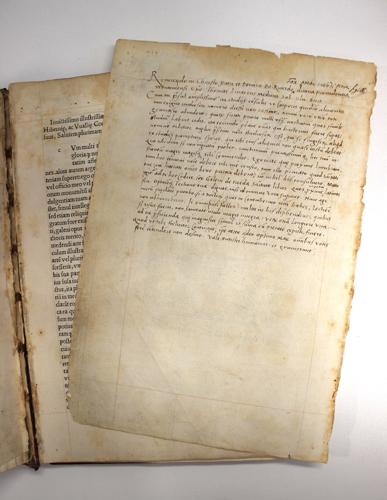
This extraordinary manuscript offers a rare and beautiful connection to the earliest years of the Royal College of Physicians. Bound in rich crimson velvet, with silver corner pieces and clasps, it contains illuminated vellum pages dating from the reign of Henry VIII. Its opening leaf is decorated in gold and vibrant colours, displaying the royal arms of England and France and the sovereign's initials.
The manuscript was created in 1557 for the personal use John Caius, one of the College's early presidents. Later pages contain the College's statutes copied around 1647, with the signature of then President John Clarke confirming their official status. Together, these remarkable pages provide a tangible record of the rules and traditions that helped shape the medical profession.
Today, this precious volume is in urgent need of conservation. Its historic velvet covers and first three leaves have become completely detached from the binding. Specialist treatment will involve sympathetic rebinding in a material closely matching the original velvet, careful restoration of the silver clasps, cleaning of the delicate vellum pages and resewing of the manuscript.
By adopting this treasure, you will help preserve an irreplaceable piece of the RCP's earliest history, restoring its beauty and ensuring that future generations can safely study, display and appreciate a remarkable record of more than 500 years of medicine.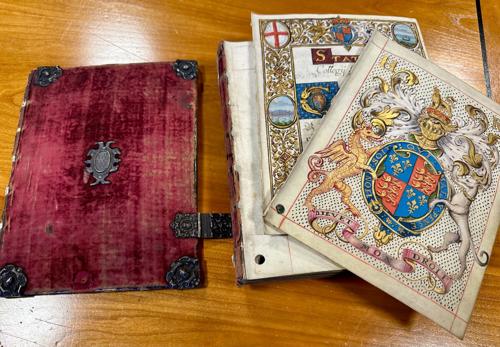

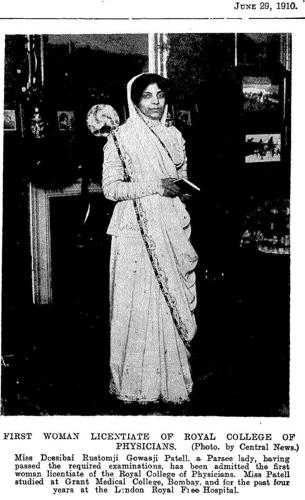
Dr Dossibai J R Dadabhoy (1881–1960) was an Indian obstetrician, gynaecologist, teacher and campaigner. She was the second woman physician formally recognised by the RCP, and the first women recipient of the RCP qualification of licentiate in 1910. She also became the first woman member of the Royal College of Surgeons of England in 1911, and became an RCP member a year later; just 3 years after women were first permitted to sit membership exams. Dr Dadabhoy was the second Indian woman to receive a medical degree from the London School of Tropical Medicine. She was awarded an MBE for her Red Cross work in 1941.
Supporting the commissioning of a portrait of Dr Dadabhoy is a powerful way to celebrate diversity and inclusion at the RCP. Her story highlights the vital contributions of women and migrant doctors; figures still underrepresented on our walls. This portrait will not only preserve history but inspire belonging, representation and change for generations to come.
Fund this commission to help honour Dr Dadabhoy’s achievements, create a more inclusive environment for today’s diverse physician community – and spark conversations about health inequalities that remain pressing today.
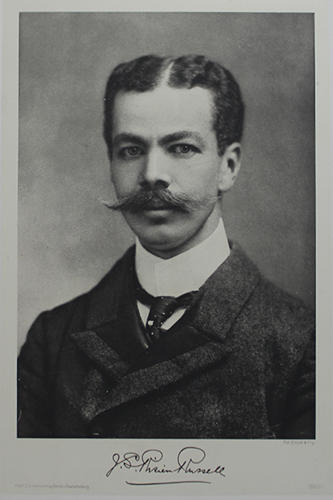
Dr James Samuel Risien Russell (1863–1939) was a pioneering neurologist, professor and one of the first Black British consultants. He was born in British Guiana, educated at Edinburgh University and became an RCP member in 1891, and a fellow in 1897. Over his distinguished career, he contributed vital research on the cerebellum and spinal cord, trained generations of University College London medical students and became consulting physician of neurology at the National Hospital Queen Square. He served as a Captain in the Royal Army Medical Corps during World War I, despite the prejudice against Black doctors.
Commissioning and displaying this new portrait in a prominent location will ensure Dr Russell’s legacy is visibly recognised alongside other leaders of medicine. It will correct historical silences and signal the RCP’s commitment to diversity, inclusion and representation within our collections. Visitor feedback highlights the lack of diversity in our historic portraiture; Dr Russell’s portrait will help foster a stronger sense of belonging for today’s medical community and inspire future generations of physicians.
Adopt this portrait to play a vital role in celebrating a trailblazing figure whose achievements, perseverance and advocacy continue to resonate in medicine and society today.
Current adopters
We'd like to thank the following individuals who have kindly adopted items in the collection:
‘Juan Valverde de Amusco’s Anatomia del corpo humano con molte figure [Anatomy of the Human Body with Many Figures] (1560)’
Juan Valverde de Amusco’s Anatomia del corpo humano con molte figure [Anatomy of the Human Body with Many Figures] (1560) is one of the most influential anatomical works of the Renaissance.
This donation by Dr Walford will support essential conservation work to repair and stabilise this 16th-century volume, ensuring that its pages and delicate engravings are preserved for future study and exhibition.
Diana has helped to protect one of the RCP’s most important early anatomical texts, a masterpiece that illuminates the evolution of medical understanding over centuries.
Conservation of Dr Una Christina Ledingham portrait:
Dr Una Christina Ledingham (1900–1965) was a pioneering physician whose career combined clinical excellence, teaching and leadership. She qualified at the London School of Medicine for Women in 1923 and went on to become a consultant at the Hampstead General and Marie Curie Hospitals. A specialist in diabetes, she became a leading authority on pregnancy in diabetic women; helping to reduce maternal and infant mortality and shaping medical practice for generations.
Displayed alongside her peers, this portrait celebrates her achievements, highlight the vital role of 20th-century women physicians and inspire today’s medical community.
Catherine's donation will support the conservation work required to ensure Dr Ledingham’s legacy is recognised and preserved within the RCP.
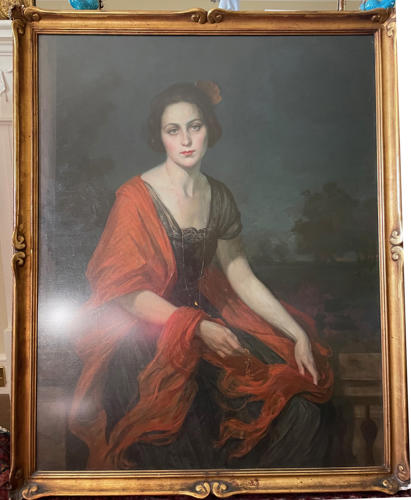
Conservation of Dr Una Christina Ledingham portrait:
Dr Una Christina Ledingham (1900–1965) was a pioneering physician whose career combined clinical excellence, teaching and leadership. She qualified at the London School of Medicine for Women in 1923 and went on to become a consultant at the Hampstead General and Marie Curie Hospitals. A specialist in diabetes, she became a leading authority on pregnancy in diabetic women; helping to reduce maternal and infant mortality and shaping medical practice for generations.
Displayed alongside her peers, this portrait celebrates her achievements, highlight the vital role of 20th-century women physicians and inspire today’s medical community.
Clare's donation will support the conservation work required to ensure Dr Ledingham’s legacy is recognised and preserved within the RCP.
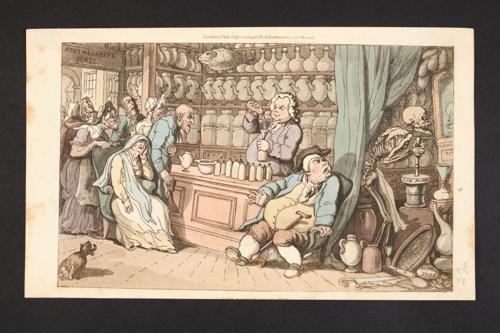
The Quack Doctor print:
This hand-coloured satirical etching and aquatint, The Quack Doctor, was created by the celebrated caricaturist Thomas Rowlandson and published by Rudolph Ackermann in 1814. While mocking the early 19th century’s questionable medical practices , the print also offers a fascinating glimpse into the interior of a crowded apothecary’s shop; complete with drug jars, mortars and bottles labelled arsenic, opium and vitriol. Behind a curtain, a skeleton assistant mixes a preparation, ominously labelled Slow Poison.
Diana's donation will conserve this fragile, rare, satirical print to enable it to be displayed and studied by future RCP visitors, illuminating the history of pharmacy and the public scepticism that once shaped medical attitudes.
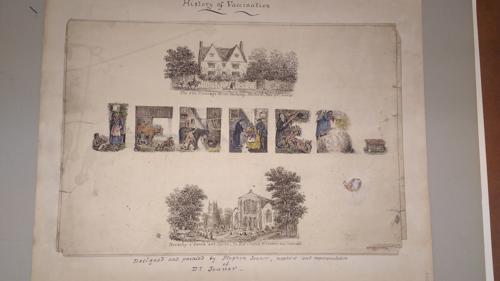
History of Vaccination print:
This rare print (c.1825–1850) was designed and painted by Stephen Jenner, the nephew of Dr Edward Jenner – the pioneering physician whose discovery of vaccination transformed the prevention of smallpox worldwide. The work is taken from an original figurative watercolour, reflecting the artistic skill within the Jenner family and offering a unique visual connection to one of the most significant figures in medical history.
As both an artwork and a historical document, the print captures the intertwining of science, medicine and culture in the early 19th century.
Jane’s donation will conserve this print to help preserve a fragile link to Jenner’s legacy, ensuring that this evocative piece can be displayed, studied and appreciated by future generations.
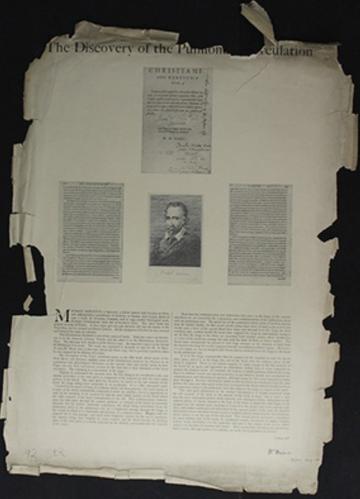
Discovery of Pulmonary Circulation print:
This research illustration features extracts and a drawing of Michael Servetus, also known as Miguel Serveto, (1509–1553) grouped above two columns of text, possibly from an old display panel about Servetus and his work. Servetus was a Spanish theologian, humanist and the first European to correctly describe the function of pulmonary circulation. The print also includes what appears to be a manuscript signature of Sir William Osler (1849–1919) in the bottom right corner. Osler was a Canadian physician who played a key role in transforming the organisation and curriculum of medical education, emphasising the importance of clinical experience.
Anita’s donation will conserve this print, preserving a rare link between two great figures in medical history, ensuring their important stories of medical discovery continue to inspire future generations.
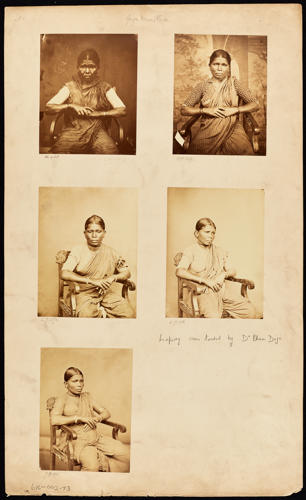
Leprosy cases treated by Dr Bhau Dajee; collection of drawings and prints – £250 (Set A) and £250 (Set B)
This remarkable group of watercolour drawings and prints record the pioneering work of Dr Bhau Dajee (1822–1874), an Indian physician said to have developed a late 19th century treatment for leprosy. The 1868–69 images document patients treated by Dr Dajee at the Grant Medical College in Bombay (now Mumbai). The collection was presented to the RCP by the Secretary of State for India, as evidence of the treatment’s apparent success. Though Dr Dajee’s precise method remained secret, contemporaries believed it to involve chaulmoogra oil; later used in the first scientifically recognised leprosy treatments. These works form an important record of early cross-cultural medical exchange and colonial-era research into infectious disease.
Dr Chamber's support enables careful cleaning, paper repair and preservation of this unique visual record of early medical innovation, allowing future generations to explore a rare intersection of Indian and European medical history within the RCP’s collections.
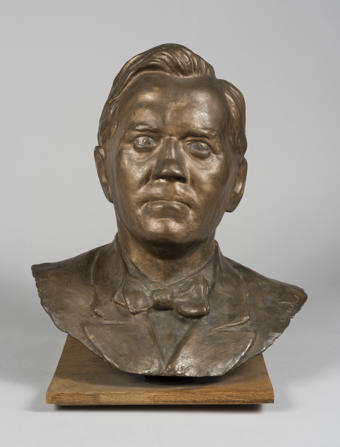
Conservation of bronze bust of Sir Alexander Fleming-
Sir Alexander Fleming (1881–1955) was elected an RCP member in 1944, following his groundbreaking discoveries of penicillin and lysozyme – which transformed modern medicine. In 1956, the RCP acquired a bronze bust of Fleming by the artist Frank Kovacs, to commemorate his extraordinary contribution to science and human health.
Today, the bust requires specialist conservation and a new base to once again be displayed prominently within the RCP’s Regent’s Park building.
Adopting this bust helps preserve a lasting tribute to Fleming’s legacy, restoring an important artwork within the collection and connecting the RCP’s visitors to one of medical history’s greatest figures.
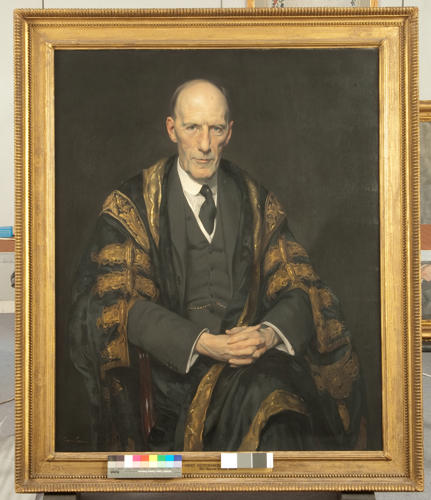
Sir Robert Hutchison portrait-
This 1938 portrait depicts Sir Robert Hutchison (1871–1960), a distinguished physician, teacher and medical author who made significant contributions to paediatrics and internal medicine. Hutchison was a RCP fellow and president from 1933 to 1935, who was knighted for his services to medicine.
Painted by celebrated Scottish artist, James Gunn, the portrait captures Hutchison’s quiet authority and intellect, reflecting both the sitter’s stature and the artist’s mastery of portraiture. Executed in oil on canvas, the painting remains a powerful testament to one of the RCP’s most respected 20th-century figures.
By adopting this treasure, The Tay Charitable Trust has helped fund essential conservation work, including glazing the painting to protect it from dust, light and environmental damage. Their support will safeguard this important portrait, ensuring that the legacy of Hutchison, and the artistry of Gunn, continuing to inspire RCP visitors.
Conservation of Dr Una Christina Ledingham portrait:
Dr Una Christina Ledingham (1900–1965) was a pioneering physician whose career combined clinical excellence, teaching and leadership. She qualified at the London School of Medicine for Women in 1923 and went on to become a consultant at the Hampstead General and Marie Curie Hospitals. A specialist in diabetes, she became a leading authority on pregnancy in diabetic women; helping to reduce maternal and infant mortality and shaping medical practice for generations.
During World War II, Dr Ledingham ran her husband’s practice while continuing her own demanding hospital work. She later served as an examiner for the RCP and University of London, and a governor of the Royal Free Hospital. Known as a brilliant but exacting teacher, she inspired respect among her students and compassion among her patients.
Displayed alongside her peers, this portrait will celebrate her achievements, highlight the vital role of 20th-century women physicians and inspire today’s medical community. Sarah's donation will support the conservation work required to ensure Dr Ledingham’s legacy is recognised and preserved within the RCP.
Conservation of Dr Una Christina Ledingham portrait:
Dr Una Christina Ledingham (1900–1965) was a pioneering physician whose career combined clinical excellence, teaching and leadership. She qualified at the London School of Medicine for Women in 1923 and went on to become a consultant at the Hampstead General and Marie Curie Hospitals. A specialist in diabetes, she became a leading authority on pregnancy in diabetic women; helping to reduce maternal and infant mortality and shaping medical practice for generations.
During World War II, Dr Ledingham ran her husband’s practice while continuing her own demanding hospital work. She later served as an examiner for the RCP and University of London, and a governor of the Royal Free Hospital. Known as a brilliant but exacting teacher, she inspired respect among her students and compassion among her patients.
Displayed alongside her peers, this portrait will celebrate her achievements, highlight the vital role of 20th-century women physicians and inspire today’s medical community. Dr Joanna Ledingham's donation will support the conservation work required to ensure Dr Ledingham’s legacy is recognised and preserved within the RCP.
Medici antique omnes folio:
Published in Venice, this 1547 folio brings together the writings of the great physicians of antiquity; including Aulus Cornelius Celsus, Scribonius Largus, Trotula, Soranus of Ephesus and Pliny the Elder. Medici antiqui omnes, qui latinis literis diversorum morborum genera & remedia persecuti sunt... assembles the foundational texts of Greco-Roman medicine into one comprehensive work for scholars and practitioners. With early manuscript annotations, ownership inscriptions and the distinctive printer’s device, this copy offers a tangible link to centuries of medical learning. It is a remarkable testament to how Renaissance humanists used ancient knowledge in a new age of medical inquiry. It is one of a handful of surviving books to contain an inscription by the RCP’s founding fellow, Thomas Linacre.
Dr Oakeley’s adoption of the Medici antique omnes folio supports essential repair and conservation of this 16th-century volume, stabilising its binding, cleaning pages and preserving marginal notes by generations of physicians. Supporting this cornerstone of Western medicine means it can continue to serve as a physical and intellectual bridge to medical science’s origins.
Conservation of 'The young man restored to life’ print:
This moving 1787 engraving was created by Robert Pollard, after a painting by Robert Smirke, and published by Pollard in London. Dedicated to the president, vice presidents and directors of the Humane Society (founded 1774), it commemorates the Society’s early lifesaving efforts; reporting that within 13 years, 897 people had been ‘restored to their friends.’
The image depicts a dramatic moment of revival; a young man sits upright in bed, supported by rescuers, as his family look on in awe and gratitude. Around him, domestic details evoke the fragility and triumph of life. The text beneath, both English and French, highlights the Society’s humanitarian mission to rescue those apparently drowned or lifeless; an early precursor to modern resuscitation and emergency medicine.
Printed on soft wove paper, the work had suffered severe damage, with tears and losses along all edges, discolouration and ink stains on the verso. Conservation treatment has included surface cleaning, aqueous washing to reduce staining, tear repair and infilling, and delicate inpainting to restore coherence.
By adopting this treasure, Dr Eric Watts has helped restore one of the most evocative medical and humanitarian prints of the 18th century. Dr Watts has supported preserving this early testament to lifesaving and compassion in medicine, a theme that continues to resonate through the RCP’s work today.
A selection of conserved items
“As a respiratory physician caring for patients with respiratory failure, I have long been fascinated by the pulmonary circulation and the discoveries that shaped our understanding of it. This remarkable print therefore has a very personal connection to my own career. It has been a privilege to help preserve a piece of medical history for future generations, and to see it so beautifully restored.” Professor Anita Simonds FRCP

“I decided at a ridiculously early age to study medicine, inspired by the old medical and surgical textbooks my grandfather and uncle kept in their attic. I spent hours poring over the fascinating, and often rather gruesome, illustrations. Adopting Anatomia del Corpo Humano feels like a wonderful connection to those early memories, and it also chimes perfectly with the fact that I am now learning Italian!” Dr Diana Walford CBE

Contact us
If you have a question about the Adopt a Treasure process or would like to discuss a particular item, please contact Sally Williams, Head of Philanthropy, at sally.williams@rcp.ac.uk who will be delighted to discuss further.
Other donations to support our conservation work
We know not everyone will be able to adopt a complete item, but every contribution plays a vital role in preserving the RCP’s remarkable collections.
Your donation will help conserve fragile books, artworks, instruments, and manuscripts; support the skilled specialists who restore them; and ensure these treasures remain accessible for study and display. Every gift helps protect centuries of medical history and keeps the stories of discovery, care, and innovation alive for future generations.
Please visit our donate page if you would like to contribute towards the RCP’s conservation work.